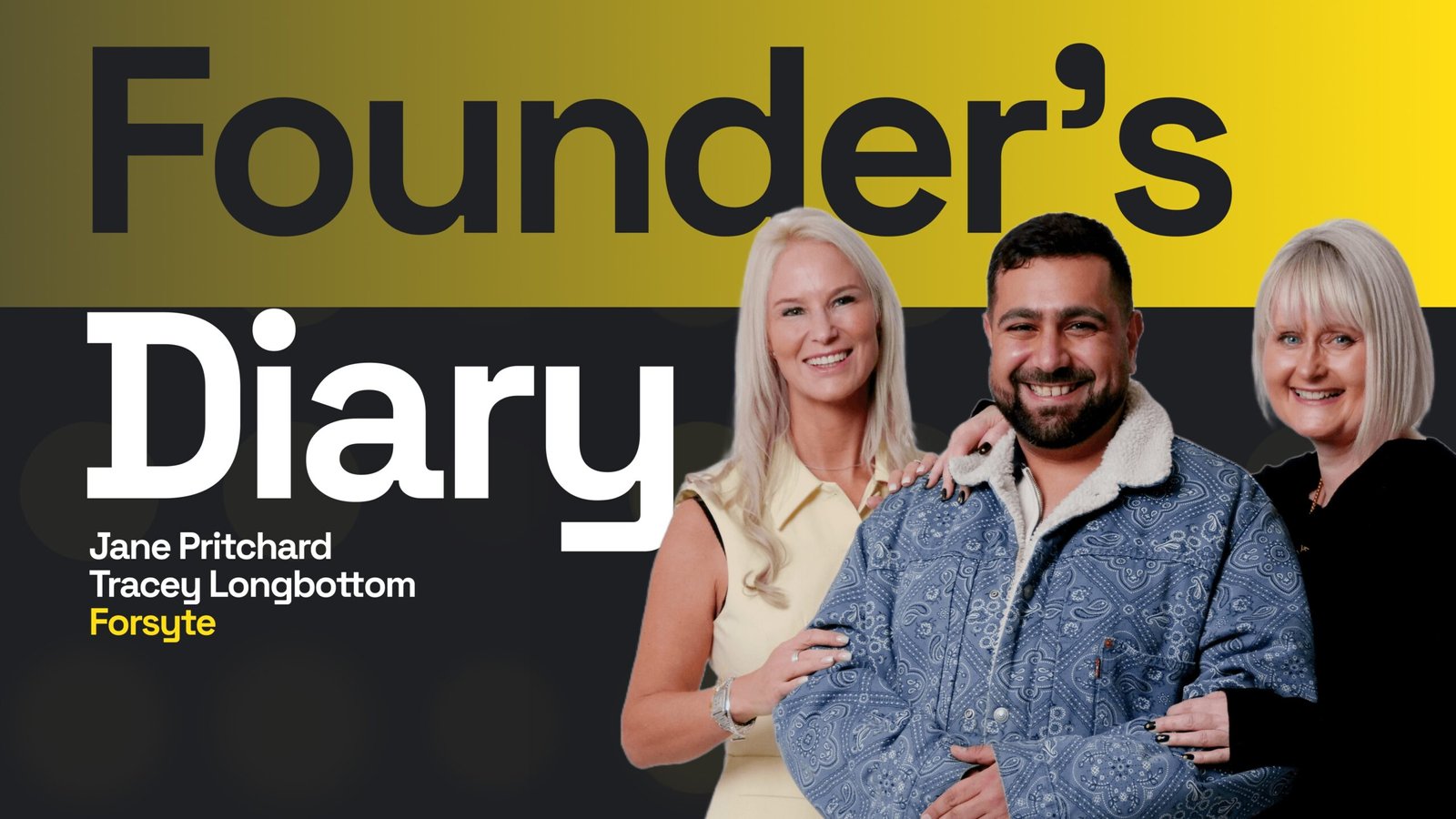
On this episode of Founders Diary, Aventine Lab’s Arsalan Abbasi sat down with Jane Pritchard and Tracey Longbottom, co-founders of Forsyte – a regtech startup obsessed with one thing: helping law firms finally get risk assessments right.
Forsyte isn’t trying to be “yet another platform” or a generic all-in-one. It does one job with almost scary focus: firmwide, client and matter risk assessment for law firms – and everything about their story flows from that.
Meet the Founders
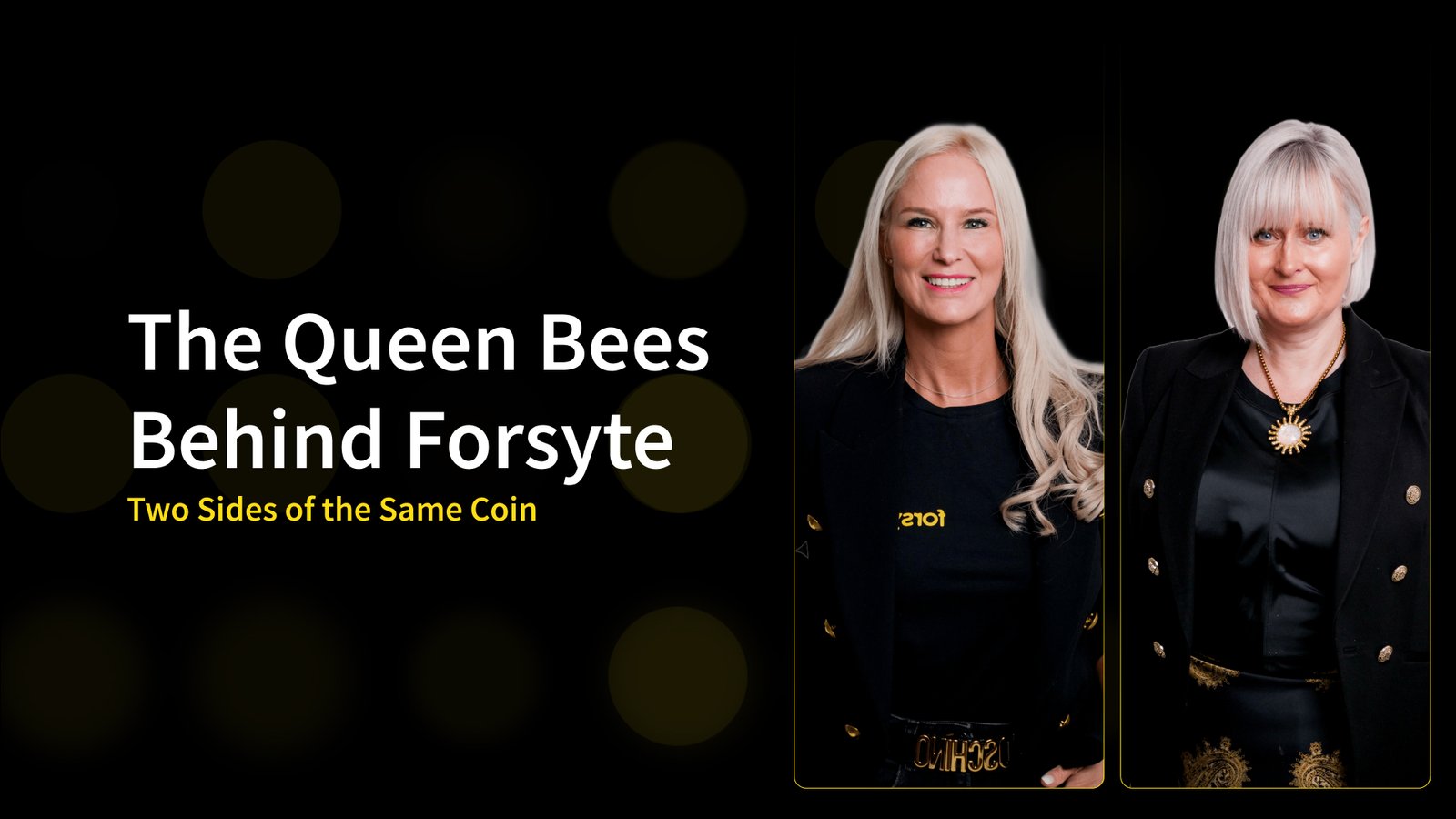
Jane and Tracey joke that they are “two sides of the same coin”:
- Jane is product and law – a former legal aid lawyer, law firm partner and digital transformation lead. She describes herself as the “nerd in the garden office, building 24/7,” let out on day release to talk to the world. Outside of work she volunteers as a river scientist, sampling rivers for pollution, and is drawn to underdogs – including her Romanian rescue dog and even Everton.
- Tracey has spent around 20 years in legal tech sales, selling everything from case/practice management to outsourcing and AML onboarding tools into law firms. She heads up the commercial side of Forsyte, loves dogs and vintage clothing, and freely admits most of her time now is spent building Forsyte with Jane.
Between them, they’ve spent decades inside the legal sector – seeing up close what works, what never does, and what lawyers quietly hate.
Why Risk Assessments – And Why Now?
“Risk assessments have been around for ages,” Arsalan points out. So why build yet another risk tool?
Jane’s answer is blunt: what exists today isn’t really a risk assessment – it’s a form.
Most firms have:
- Paper forms that became digital forms
- Linear workflows that force everyone through the same steps
- Multiple systems for IDV, source of funds, open banking, screening, etc.
- No single, joined-up view of risk across the firm
“Anyone can digitise a form,” Jane says. “What we’re doing is completely different. We started at the end and asked: what does a law firm actually need to know from its risk process? Not ‘how do you fill in a form’, but how do you follow the risk?”
Over the last decade, Tracey and Jane watched firms pile on point solutions:
- IDV tools
- Source of funds / source of wealth providers
- Open banking
- Screening and data feeds
The result? More data, less clarity.
Some firms they spoke to had five or six systems all trying to “do risk”, even running different risk assessments across different providers. It’s fragmented, inconsistent, and almost impossible to defend under real scrutiny.
Forsyte’s core thesis:
Risk shouldn’t just be recorded. It should be understood, connected, and used to stop problems before they happen.
Dynamic, Matter-Specific Risk – Not One-Size-Fits-All
A key point Jane makes is that risk is contextual:
- A conveyancing matter is not the same as a private client estate.
- A high street firm isn’t the same as a Magic Circle practice.
- A client’s risk profile is different from the matter’s risk profile.
Templates and generic forms don’t reflect this.
Forsyte’s approach:
- The risk assessment is dynamic, changing based on:
- The firm’s own policies and geography
- The client type
- The type of work / matter
- It focuses on flags and risk signals, not just “high/medium/low” boxes.
- It is designed to reflect how lawyers actually learn about a client and matter over time, not a rigid linear tick-box journey.
“You can’t just have a dynamic form,” Jane says. “It has to be dynamic to who you are, who your client is, and what kind of matter you’re doing.”
Data In, Intelligence Out: How Forsyte Fits the Stack
A recurring theme in the conversation is how much law firms hate re-keying data and logging into yet another tool.
Forsyte’s design principles:
- Ingest, don’t replace
They don’t try to become the IDV provider, PMS, CMS or DMS. Instead, they:- Integrate via APIs with case/practice management, IDV, data and AML tools
- Or use newer techniques to ingest and interpret data even without formal APIs
- Universal APIs both ways
Their tech co-founder has built “universal APIs” so:- Everything done inside Forsyte can be exposed back out, if a firm wants to use that data elsewhere.
- Forsyte can sit horizontally across the stack – pulling from and pushing to the tools a firm already uses.
- Works as standalone, but not isolated
The product can operate without integrations if needed, but it’s deliberately designed to fit anywhere in a firm’s tech ecosystem.
Tracey’s take:
“Nobody wants to re-key data. We knew from day one this had to ingest data and expose it cleanly. Integrations used to be terrifying for firms. We wanted to remove that fear.”
Funding, MVP and the ETI Partnership
Forsyte didn’t start with huge funding – it started with Malbec and Miro.
- Jane and Tracey sketched the original concept on Miro “at weekends” while still in full-time roles.
- Within 4–5 weeks, they had a functioning proof of concept application – not just Figma screens.
- Only then did they bring in a UX specialist to map the full user journey and design “high-level UX across the whole experience” before building the full product.
On funding:
- They explored VC and PE but wanted partners who:
- Understood legal and law firms
- Shared their values
- Would let them stay laser-focused on the problem
They eventually joined the ETI Group:
- A managed service provider with ~150 law firm clients
- Already holding Cyber Essentials Plus and ISO accreditations – saving Forsyte a year or more of compliance work
- Operational infrastructure that lets Forsyte move fast without reinventing the basics
They quit their day jobs in late June, went all-in on their MVP, and are already onboarding sizable clients.
Tracey’s target for next year?
“At least 100 clients by next September.”
Go-To-Market: Brand, Partnerships and Relationships
Forsyte’s GTM strategy has three legs:
1. Brand First
From day one, they invested heavily in:
- Brand and visual identity (black, white, grey and yellow – with bees, obviously)
- Clean UX/UI
- A product that not only works but looks and feels modern
This goes against the classic SaaS playbook (“build product first, polish later”), but in legal they knew aesthetics and clarity heavily influence adoption.
“Law firms don’t want to buy ugly, clunky tools anymore,” Tracey says. “We wanted people to know who we are quickly – and enjoy using what we’ve built.”
2. Partnerships That Actually Mean Partnership
They are big on channel and partnerships, but with a rule:
“We only partner with people who partner back with us.”
That means:
- Identity providers and AML platforms that refer clients when those clients need holistic, firmwide risk, not just case-level AML.
- Forsyte actively showcasing partners in return – a symbiotic approach.
They already receive dozens of inbound enquiries per month through partners.
3. Direct Sales with Real Domain Experience
They’re also building a direct sales team with people from the legal world:
- Sales that’s happy to pick up the phone
- People who understand law firm culture and language
- A focus on long-term relationships, not one-off “deals”
And critically: they don’t just sell to anyone.
If someone’s not ready, or the fit is wrong, they’ll point them to another solution, consultant or partner.
“We’re not just a vendor, we’re a partner,” Jane says. “Sometimes that means saying: this isn’t what you need right now – but here’s who can help.”
Hyper-Focus as a Strategy, Not a Limitation
Forsyte is deliberately not adding IDV, screening, document automation or other shiny features – yet.
Arsalan calls it singularity of focus, and asks whether it was intentional.
Jane says they’ve been challenged on it:
“People ask, ‘Is just doing risk assessments enough?’ And we say yes. Right now, that is the problem we’re here to solve.”
They believe:
- Being known clearly for one thing – risk assessments for law firms – is more powerful than being vaguely known for many.
- Focus unlocks new markets later (CSPs, accountants, offshore jurisdictions) by mastering one environment first.
Internally, that focus shows up as:
- Kanban style product management – now / next / later
- Weekly re-prioritisation based on real client feedback
- Ruthless decisions about which 10 ideas get built next, out of dozens they could build
Tracey’s job, as she jokes, is often to pull Jane back from the “super cool thing” to the most useful thing law firms are asking for.
UX, Icons and Obsession With Detail
Arsalan calls out Forsyte’s UI as a differentiator – especially compared to cluttered, multi-tabbed risk tools he’s seen.
Key principles:
- They did not copy anyone’s UI. They started with a blank page and years of complaints from users.
- They focus heavily on:
- Standardised components
- A consistent icon library
- Clear visual hierarchy and minimal clutter
Everyone in the team – not just designers – is responsible for product quality:
“Our engineers are product people,” Jane says. “If they think something should work better, they tell us. You can’t just code in isolation in our platform.”
Female Founders in Legal Tech
Towards the end, the conversation turns to Jane and Tracey’s experiences as women in law, tech and sales.
Jane:
- Spent years in criminal defence in the East End and later as a law firm partner – tough, male-dominated environments.
- When she moved into tech leadership, she noticed an immediate drop in how seriously she was taken compared to when she was “the lawyer”.
That experience shaped how she leads now:
- Hiring for values and diversity
- Being intentional about equality, equity and opportunity
- Refusing to accept the narrative that “you can’t find female engineers”
Tracey:
- Has spent 20 years in tech + sales + legal.
- Personally hasn’t felt directly discriminated against, and sometimes found being a woman an advantage in building trust.
- But she’s very clear that sales is a meritocracy, whereas other roles (like partner tracks in law firms) can be more constrained.
Both agree:
- They wouldn’t want to do this alone.
- Their partnership – plus their technical co-founder Julian – is a huge part of their resilience and confidence.
“We fought from the ground up,” Jane says. “We spent years fixing other people’s problems. At some point we realised: we deserve to solve them ourselves.”
Final Thoughts
What stands out most from this Founders Diary isn’t just the product – it’s the combination of:
- Deep domain expertise in law firms and regulation
- Hyper-focus on one painful, universal problem: risk assessments
- Real respect for lawyers, analysts and consultants
- Modern product thinking – UX, integrations, data, AI – without losing the human centre
Forsyte might be “just” a risk assessment tool.
But if you listen to Jane and Tracey, you realise that’s exactly the point.
They’ve picked the problem most firms can’t get right – and are quietly building the kind of product that could make risk feel less like a burden and more like a genuine advantage.